Flat roof repairs in summer: what we check and why heat damage is often invisible from below
Most flat roof failures start at the top and only reach the ceiling months later. By the time you see a damp patch, the surface has usually been compromised for a season.
That delay is what makes summer the most deceptive time of year for flat roofs. The sun is doing damage you cannot see from inside, and by the time autumn rain arrives to reveal it, the window for a straightforward repair may have already narrowed. This post explains what actually happens to a flat roof in summer, what we look for when we inspect one, and how we decide whether a patch or a full replacement is the right answer.
Why flat roofs fail in summer specifically
Heat is harder on a flat roof than most people realise.
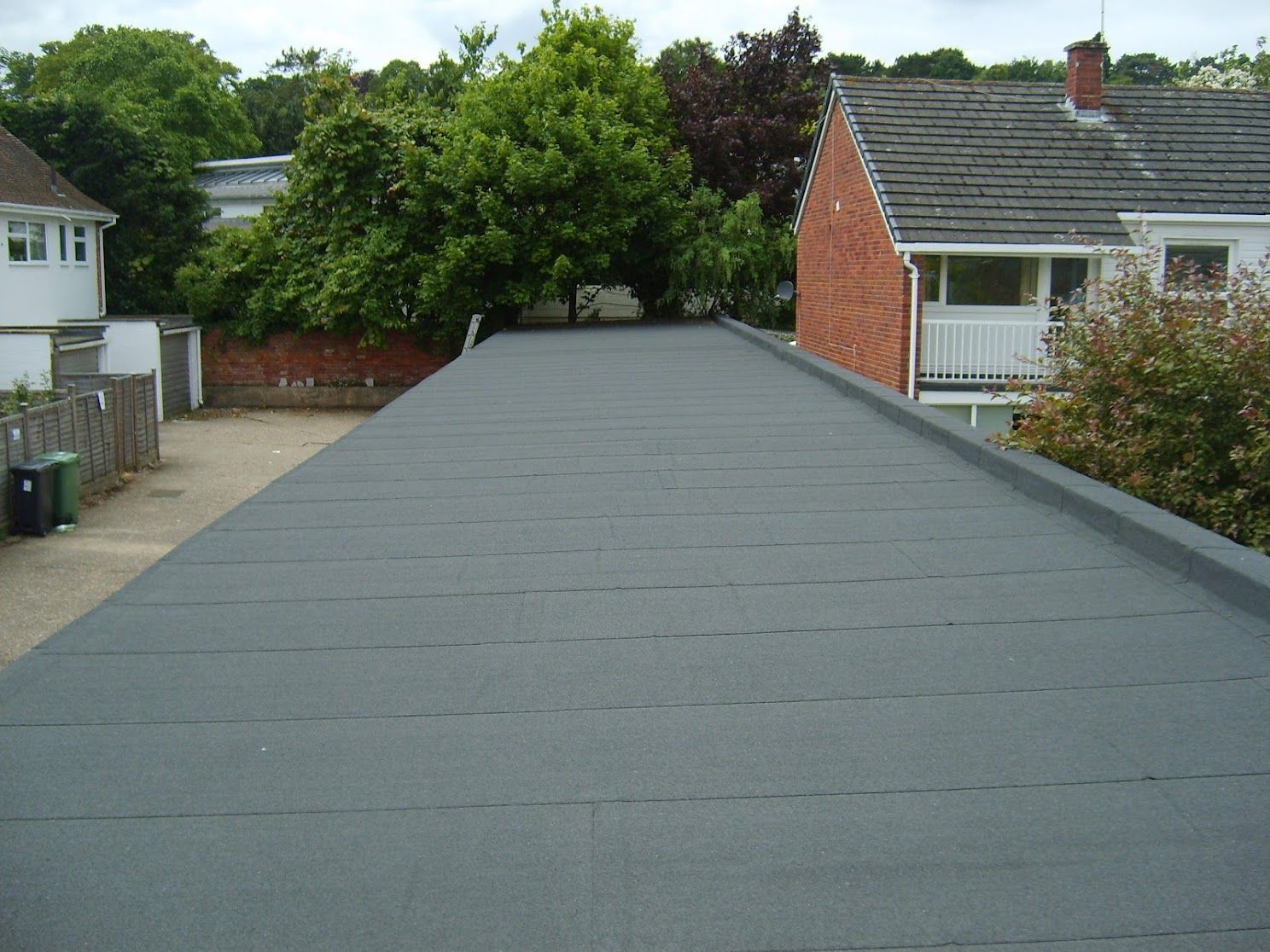
UV degradation works slowly and continuously. Prolonged sun exposure breaks down the surface layer of a flat roof over time, making it brittle, prone to cracking, and less able to shed water effectively. This process happens across the whole surface, not just at obvious weak points. A roof that looks intact from the outside, and shows nothing unusual from the inside, may already have a surface that will fail as soon as the next significant rainfall puts it under pressure.
Thermal expansion is a separate problem. A flat roof surface heats up significantly during a hot day and cools again at night. That cycle of expansion and contraction puts repeated stress on seams, joints, and the points where the roof meets a wall or upstand. Over a number of summers, those stress points can open up, even on a roof that was installed correctly. The movement is small each time, but it accumulates.
Ponding water causes damage in summer too, though in a different way than in winter. When water sits on a flat roof in warm weather, it heats up and evaporates, but it leaves behind whatever it carried: dirt, debris, and mineral residue. Over time that residue builds up in low spots and adds weight, holds moisture against the surface, and accelerates the breakdown of the material beneath it. A flat roof with persistent ponding is ageing faster than one that drains cleanly.
Together, these three processes mean a flat roof can be in serious decline by late summer while showing nothing from below. The damage is real and ongoing. It just has not reached the ceiling yet.
What we check on a flat roof survey
A flat roof survey is not a quick glance from ground level. We get up on the roof and work through it methodically.
Surface condition is the starting point. We look at the whole surface for signs of cracking, blistering, splitting, or any areas where the surface has lost integrity. Some of this is obvious. Some requires closer inspection, particularly in areas that have been in direct sun all day or where water has been pooling.
Seam integrity matters because seams are where failures concentrate. Wherever the roof surface has a join, that join is a potential weak point. We check each one for signs of lifting, separation, or stress cracking, particularly around edges where thermal movement is greatest.
Edge trims and upstands
are checked carefully. The point where a flat roof meets a wall, a parapet, or a raised edge is where water most commonly finds a way through. These junctions need to be properly formed and properly adhered. If an upstand has pulled away from the wall, or an edge trim has lifted, water will get behind it.
Outlets and drainage are inspected for blockage and for the condition of the area immediately around them. Outlets that are partially blocked slow drainage and increase ponding. The surface around an outlet often shows the first signs of stress because water sits there longest.
Parapet flashings, where present, are checked for condition and fit. A flashing that has cracked, lifted, or lost its seal at the top allows water to track down behind the roof surface, which is a failure mode that can cause significant damage before it becomes visible internally.
The substrate below is assessed where we can access it. If the roof surface has been allowing moisture in, the deck beneath it may have started to soften or deteriorate. That changes the repair options significantly. A sound substrate means a patch or a new surface is straightforward. A damaged substrate means the work is more involved.
We provide all of this as a written, photographic report. You get a clear picture of what is actually happening on your roof, not a verbal summary on a doorstep.
When patching is the right call
A patch repair is the right answer when the failure is localised and the rest of the roof is in reasonable condition.
A single seam that has lifted around a corner, or a small area of surface damage near an outlet, does not mean the whole roof needs replacing. If the substrate is sound, if the rest of the surface is still performing, and if the failure has a clear and contained cause, a well-executed repair will extend the life of the roof without the cost and disruption of a full replacement.
We are straightforward about this. If a patch will do the job, we say so. There is no benefit to us in recommending a full replacement when a repair is the honest answer. We have been doing
roof repairs across the Thames Valley for 40 years, and a reputation built over that time is worth more than an upsell on a single job.
The key condition is that the rest of the surface is genuinely sound. A patch on a roof that is failing across its whole area is short-term thinking. It will hold in one place while the surface continues to deteriorate around it. That is why the survey matters. It tells you whether you are dealing with a single localised problem or something more widespread.
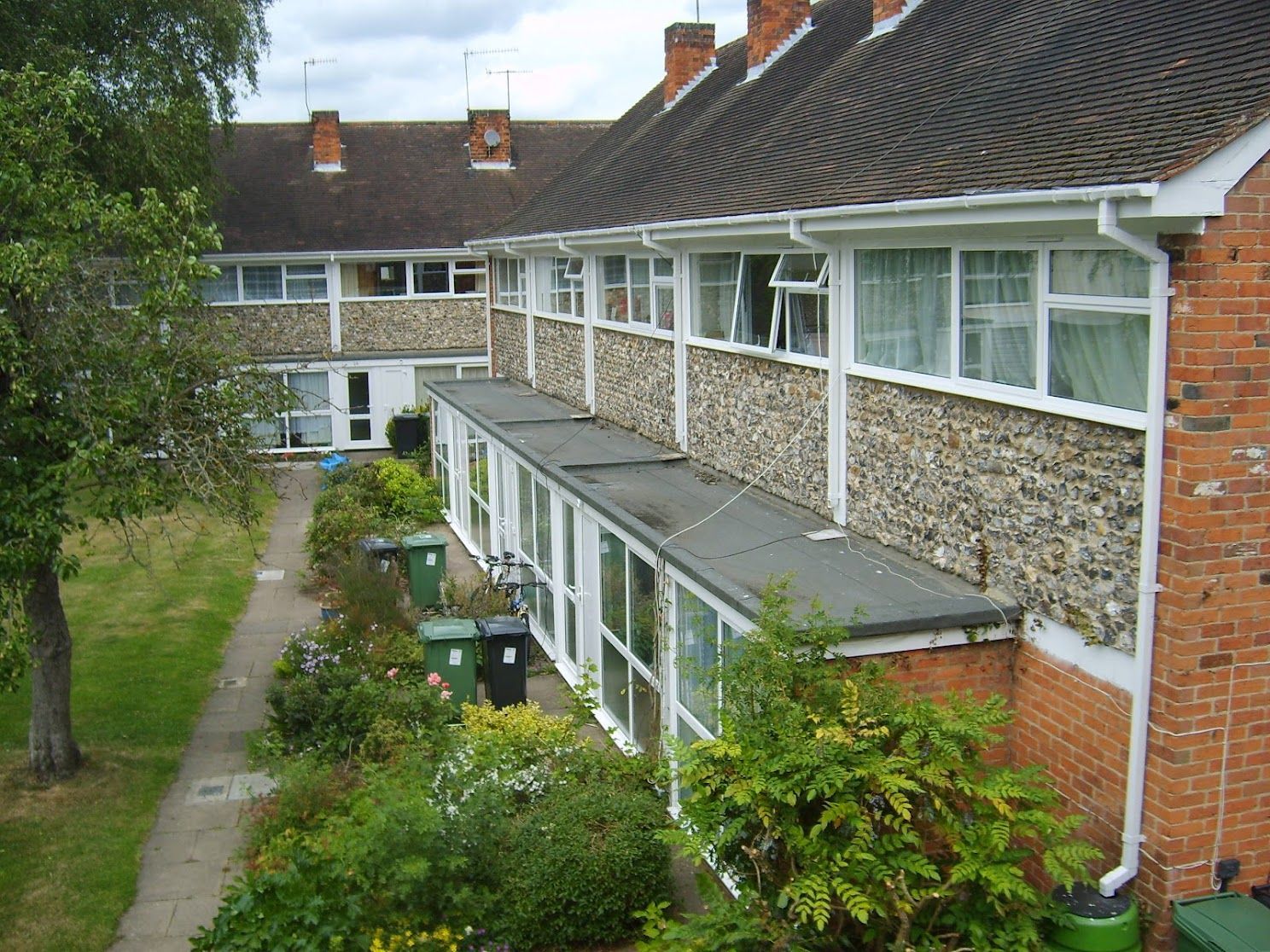
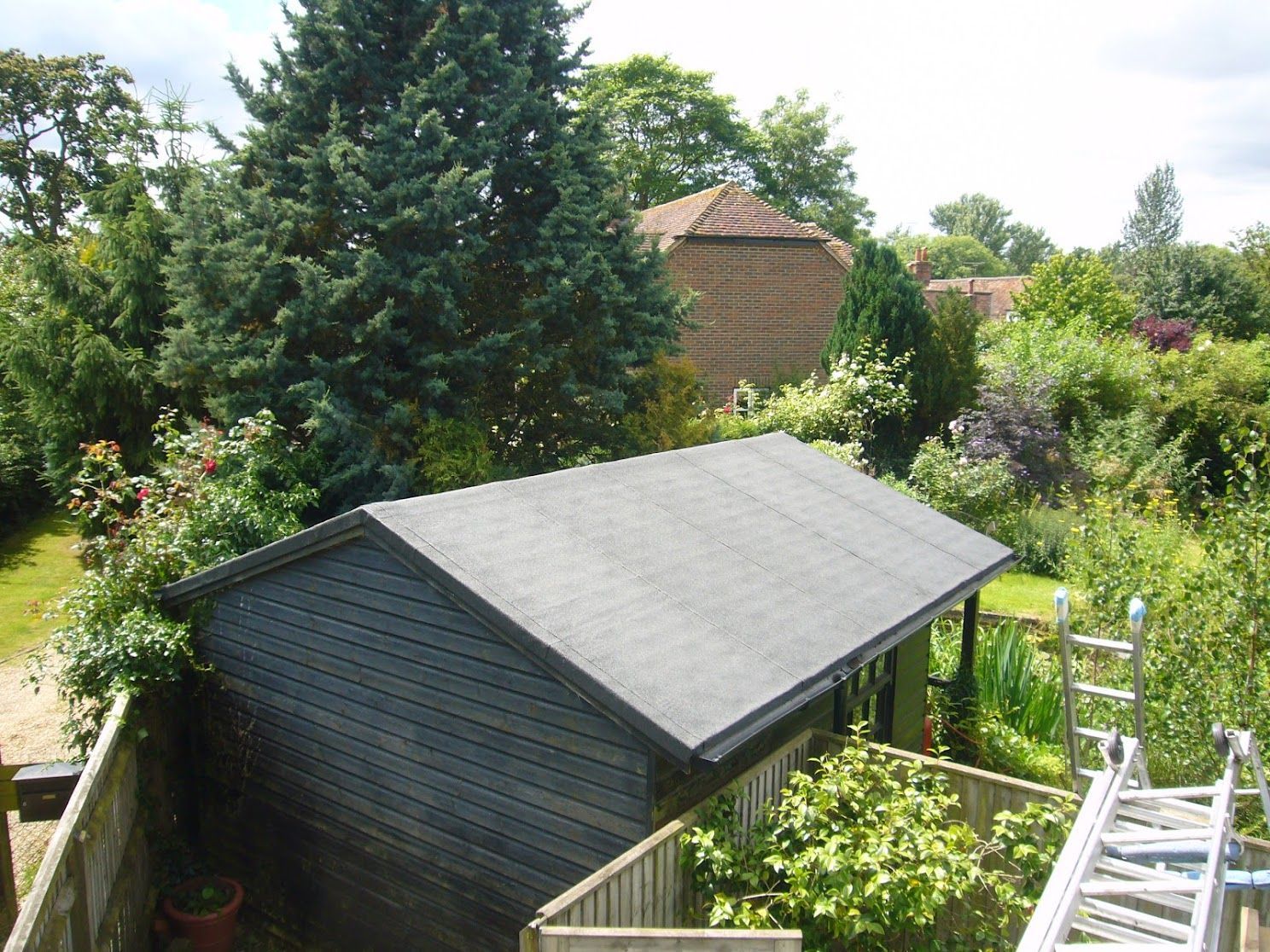
For many kitchen extension roofs in Henley and garage roofs across the area, a targeted repair at the right time is all that is needed to get several more years of reliable performance.
When the whole roof needs replacing
There are situations where a patch is not the honest answer, and we will tell you clearly when that is the case.
Widespread surface failure is the clearest signal. If the surface is cracking, blistering, or showing UV degradation across most of its area, patching individual spots will not address the underlying condition. The surface has reached the end of its serviceable life and needs to come off.
Ponding across the whole roof that has been present for years indicates that the falls, the slight slopes built into a flat roof to direct water to the outlets, are no longer doing their job. That may be because the substrate has deflected, or because the roof was never laid with adequate falls. Either way, it is a structural problem that a surface repair cannot fix.
Substrate damage is the other deciding factor. If moisture has been getting through for long enough to soften or rot the deck below, the repair has to go deeper than the surface. In that situation, a full replacement is the only approach that will produce a durable result.
This pattern is common in 1960s and 1970s extensions across Reading and the surrounding area. Roofs of that age have often had one or two surface repairs over the decades, and there comes a point where the substrate has simply had enough. A full replacement at that stage, done properly, should give you another 20 to 25 years without the cycle of repeated repairs.
Our
flat roof services cover both repair and full replacement, and the survey is what determines which one is appropriate for your roof.
Book a free flat roof survey
If your flat roof is ageing, if you have noticed a damp patch inside, or if you simply have not had it looked at in a few years, a survey is the right starting point. We will get up on the roof, go through it properly, and give you a written photographic report of what we find. No obligation, no pressure, just a clear picture of what is actually there.
Book your
free flat roof survey and we will take it from there.