What we've fixed in Reading this summer: a roofer's view of the local property mix
We've worked on roofs across Reading every week this summer. From Caversham to Earley, every neighbourhood has its own roof issues. Here's what we've been called out for.
Caversham — Victorian terraces and Edwardian semis
Caversham is one of the most rewarding areas to work in. The housing stock is genuinely varied, from tightly packed Victorian terraces near the river to broader Edwardian semis on the roads climbing toward Caversham Heights. Both eras produce a predictable set of problems, and this summer we've seen most of them.
Lead apron
failures on bay windows are the most common call-out. The bay window is almost a defining feature of the Edwardian semi, and the lead apron that sits at the junction between the bay roof and the main wall is under constant stress. It expands in summer heat, contracts in winter cold, and after 100-plus years, even well-installed lead eventually lifts, cracks, or pulls away from the wall.
When it does, water tracks down the inside of the cavity and shows up as a damp patch on the ceiling above the bay, or a stain on the plasterwork inside the window reveal. We work to Lead Sheet Training Academy standards on all lead work, so when we refit or replace an apron, it's done correctly and fixed to last.
Chimney flashing leaks are the second recurring issue. Caversham's older properties often have original chimney stacks that have never had their flashings properly attended to. The step flashing and back gutter around a chimney are the most complex lead details on a domestic roof. When the mortar pointing fails, water gets behind the flashing and into the roof structure.
We've re-dressed and re-pointed several chimney stacks in Caversham this summer, including one on a detached Edwardian property near the Thames that had been leaking for two winters before the owner finally tracked down the source.
If you're in Caversham and you've got a bay window or a chimney stack, it's worth getting eyes on the lead before autumn arrives.
Tilehurst — 1930s housing, mixed concrete tile and clay
Tilehurst is dominated by 1930s semi-detached and detached houses, built during the interwar expansion of Reading's western suburbs. The roofs are typically pitched at a moderate angle and covered in either original clay plain tiles or, more commonly now, concrete interlocking tiles that were laid as replacements in the 1970s and 1980s. That replacement generation of concrete tiles is now 40 to 50 years old, and it's starting to show.
Ridge tile movement is the issue we see most in Tilehurst. On a concrete-tiled roof, the ridge tiles are bedded in mortar along the apex. Over decades, that mortar dries out, cracks, and allows the ridge tiles to shift. A loose ridge tile is more than a cosmetic problem. In a storm, it can lift completely and come down through the roof covering below, or land in the garden. More commonly, it simply allows water into the ridge line, which then saturates the felt and timbers underneath.
We've re-bedded and repointed ridge tiles on several Tilehurst properties this summer, and on two of them we found the underlying felt had already failed, requiring partial re-felting before the ridge work could be completed properly.
Fascia rot is the second consistent finding. The 1930s houses in Tilehurst were built with timber fascias and soffits, and many still have them. Decades of repainting can only do so much. Once water gets behind the paint film, the timber absorbs moisture and begins to decay. Rotten fascias don't just look poor, they undermine the gutter fixing and can allow birds and insects into the roof void.
We carry out
Reading roof repair and roofline work together where needed, replacing timber fascias with low-maintenance uPVC boards that won't need painting again.
If your Tilehurst property still has its original timber roofline, it's likely due for attention.
Earley and Lower Earley — post-war and modern estates
Earley and Lower Earley are a different world from Caversham and Tilehurst. The housing here is mostly post-war, with large sections of Lower Earley built from the 1970s through the 1990s as part of one of the biggest housing developments in Europe at the time. The roofs are generally concrete interlocking tile on relatively shallow pitches, with felt and batten beneath. They were built quickly, and some of the detailing reflects that.
Storm damage to ridge tiles is the most frequent call-out after any significant weather event. The shallow pitches common on Lower Earley estates mean ridge tiles take more direct wind loading than on steeper Victorian roofs. We've been out to multiple properties in Earley this summer following the July storms, replacing ridge tiles that had lifted or cracked. In several cases the damage was to dry-fix ridge systems that had been installed as upgrades but not fixed correctly, allowing the plastic clips to fail under load.
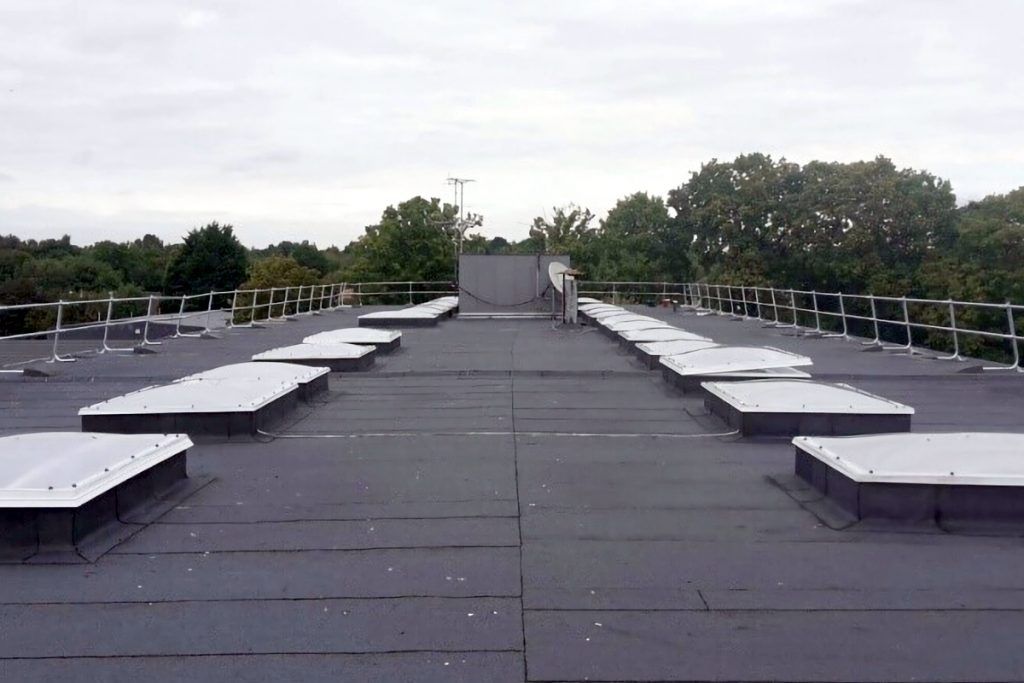
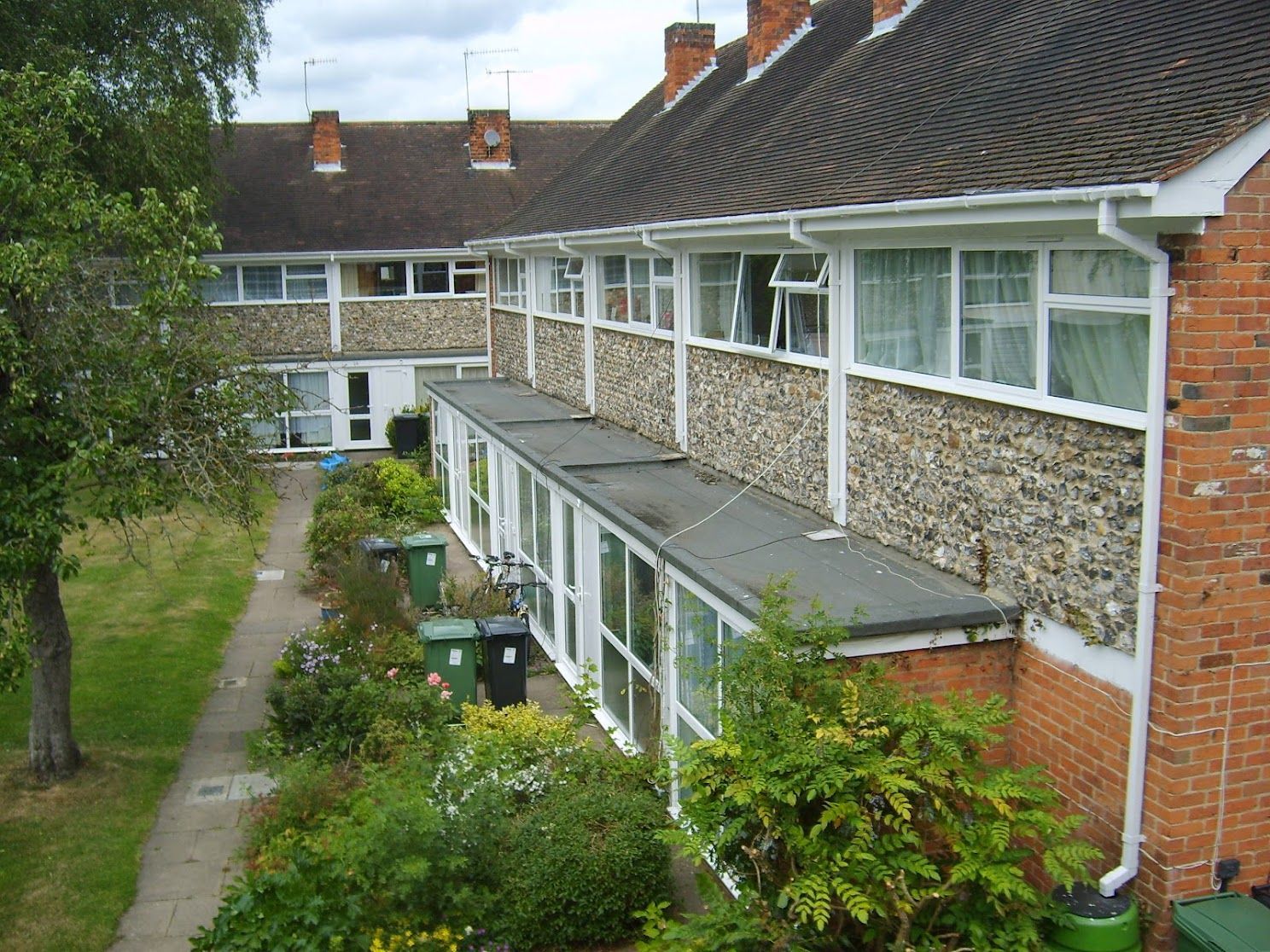
Ageing felt roofs on garages are the second major issue we encounter across Earley. The integral and attached garages on these estates were almost universally covered in mineral felt when built, and that felt has a finite lifespan. Most felt flat roofs last 10 to 15 years. Many of the garages in Lower Earley are now 30 to 40 years old, and the felt is well past its useful life. We've replaced a number of garage roofs in the area this summer, in most cases upgrading to a modern torch-on system or GRP fibreglass finish that will outlast the original felt by decades.
Our
free roof survey is particularly useful for Earley properties where the garage roof and the main roof may both need attention. We photograph everything and give you a clear picture of what needs doing now and what can wait.
Central Reading — Victorian terraces near the station
The streets around Reading station and the town centre contain some of the oldest and densest residential roofing in the area. Victorian terraces, many of them now in multiple occupation or recently converted back to single dwellings, with original Welsh slate roofs that have been patched, re-patched, and patched again over 130-odd years. This is where the most complex work tends to be.
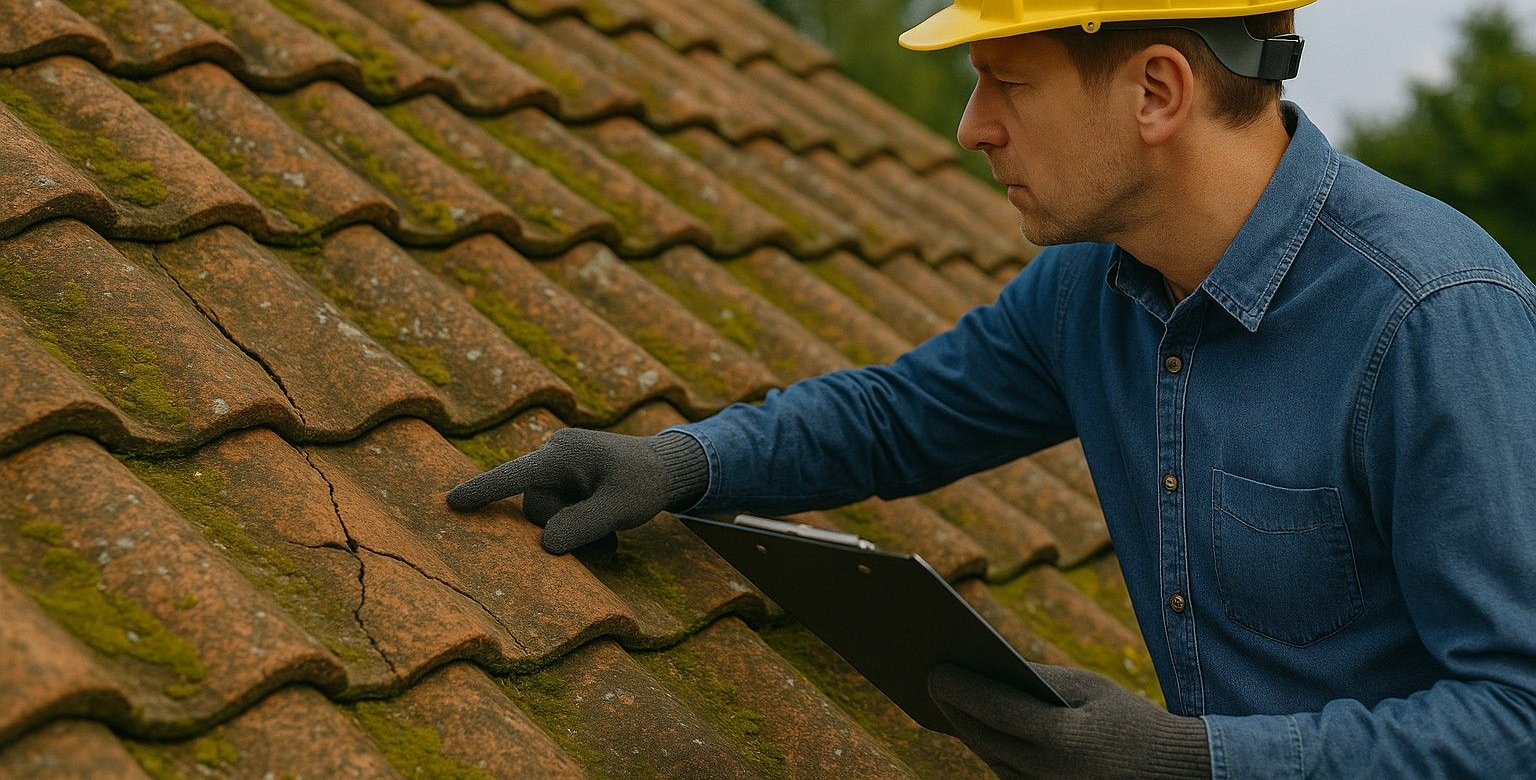
Slipped slates are the most visible problem. Welsh slate doesn't wear out, but the nails that hold it do. As iron or steel fixings corrode, individual slates begin to slip. A handful of slipped slates is a repair job. A roof where the nails have generally failed is a re-slate. We've done both in central Reading this summer, and the honest assessment is always the same: if more than 20 to 25 per cent of the slates are loose or slipped, a full re-slate is more economical than repeated patching.
Valley failures are the second major issue on these terraced roofs. The valleys, where two roof slopes meet, are typically lined in lead or mortar-bedded tile, and on a terrace that runs for 20 or 30 houses, every roof has at least one valley. Failed valley lead or cracked mortar allows water to track down into the roof structure at exactly the point where two slopes are shedding water together. We've re-lined several valleys in central Reading this summer, working to British Standard 5534 throughout.
Complex chimney work is the third consistent finding. The Victorian terraces near the station often have multiple chimney stacks per property, some of them shared party-wall stacks serving several flues. The lead work on these is intricate, and it's not a job for anyone without proper heritage and lead skills. We've been carrying out this kind of work in Reading for 40 years, and we're NFRC-accredited, which means our work is independently assessed against national standards. That matters when you're dealing with a complex stack on a property that's been standing since 1880.
For anything in central Reading, get a proper survey done before committing to a repair. The full picture is rarely visible from the ground.
How Reading customers book us
We're based in Peppard Common, 7 miles from Reading. We're out in the town most weeks, and we can usually turn a survey around quickly. We offer a free photographic roof report for all Reading properties, which gives you a clear record of what's on your roof before any work begins. We've been working as roofers in Reading since 1985, and we know the housing stock well.