Why September is the right month to check your gutters (before October's leaves hit)
There's a four-week window in September when gutter work happens easily. After early October, the leaves start falling, and every gutter job becomes a clearance job first.
Book a guttering repair in September and you're dealing with the actual problem. Book it in November and you're paying someone to dig out compacted leaf mulch before they can even see what's wrong underneath.
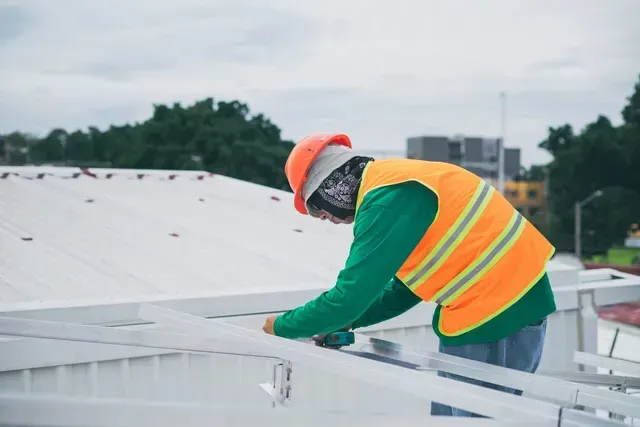
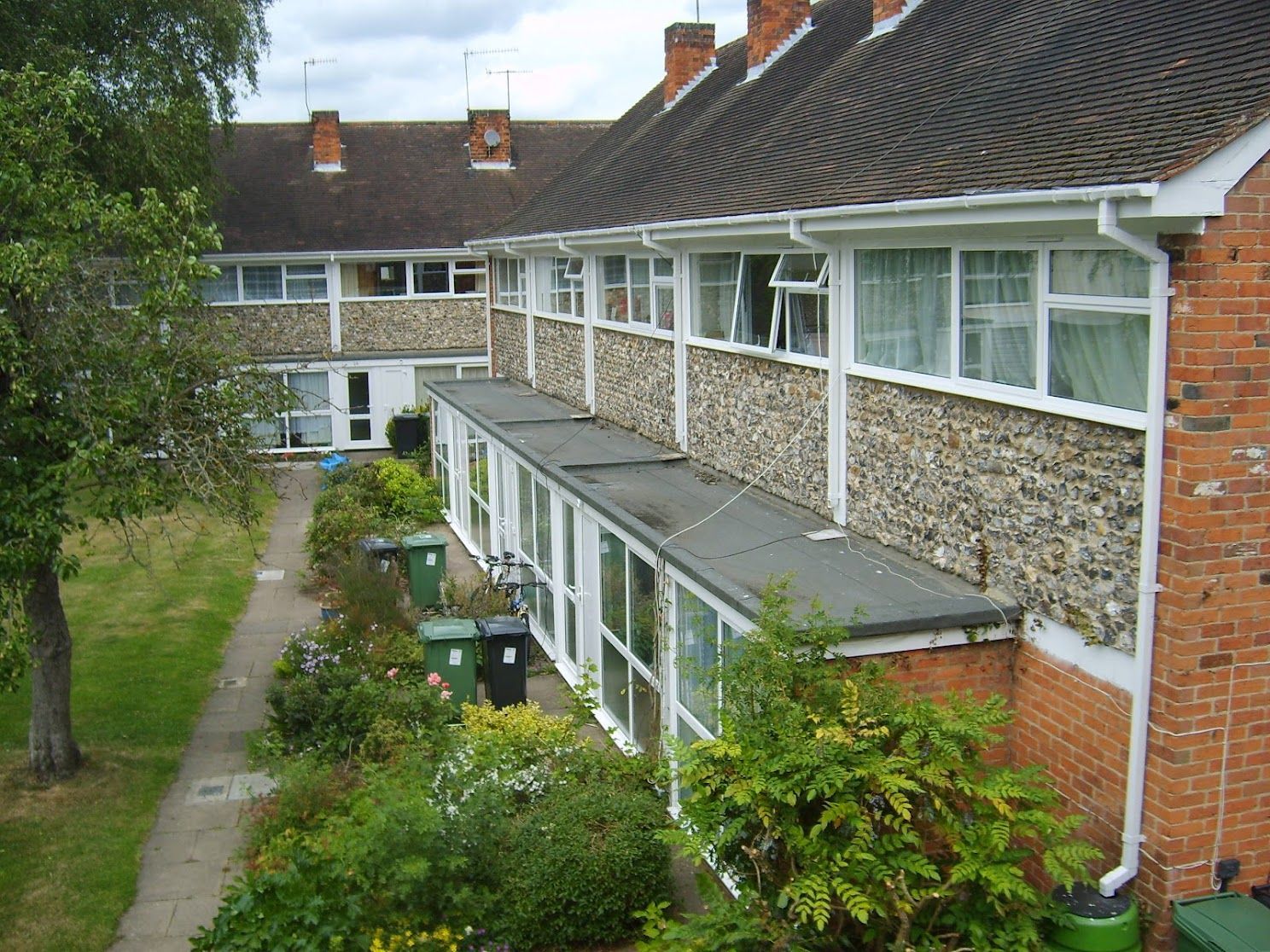
A job we saw this summer
What failing gutters do over winter
Most people think of a broken gutter as a nuisance. Water spills over the edge, it looks untidy, they'll deal with it in spring. That's the wrong way to think about it.
A gutter that's leaking, sagging, or blocked isn't just failing to carry water away. It's directing water somewhere it shouldn't go. And over a Thames Valley winter, that somewhere causes serious damage.
Saturated masonry. When water runs down the face of a wall repeatedly, the brickwork absorbs it. Older properties in Henley conservation area and along the older Reading streets, where the brickwork has been doing its job for a century or more, are particularly vulnerable. Once moisture is in the wall, it doesn't leave quickly.
Frost damage. Saturated masonry and sub-zero temperatures are a bad combination. Water expands when it freezes. Bricks and mortar crack. Pointing fails. What started as a dripping gutter joint becomes a repointing job worth hundreds of pounds.
Internal damp. A persistently wet external wall eventually passes moisture through to the inside. You'll see it first as a tide mark on a bedroom or landing wall, often on a gable end or below a parapet. By the time it's visible inside, the wall has been wet for weeks.
Fascia and rafter damage. The fascia board sits directly behind the gutter. When a gutter joint leaks or a bracket lets the gutter pull away from the board, water runs behind the gutter and sits against the timber. Dry rot can establish in a single wet season. Once it's in the fascia, it spreads into the rafter feet, and a repair that should have cost £200 becomes structural work.
That's the cascade. A leaking joint leads to wet masonry, which leads to internal damp or frost damage, which leads to structural timber rot. Each step is preventable. None of them are inevitable. But they all start with a gutter that nobody checked before winter.
The September window
September gives you something October doesn't: visibility.
The gutters are empty. The summer has been dry enough, in most years, that any debris sitting in the channel is light and loose rather than compacted. More importantly, the brackets, joints, and union pieces are exposed. You can see exactly what's there.
By early October in Sonning Common or Nettlebed, the oak and beech are starting to drop. The first flush fills gutters fast. A gutter that had a small blockage at an outlet becomes a gutter that's holding a pond within a week. And the leaves mat down. They pack around joints and bracket fixings. They hold moisture against the timber fascia. What was a visible problem in September becomes a hidden one under six inches of wet leaf matter.
The dry weather is the other factor. Sealant and gutter repair compounds need dry conditions to cure. Replacing a section of half-round or ogee guttering, re-sealing a union joint, or refixing a bracket that's pulled out of the fascia, all of these are straightforward jobs in September. In November, you're working in the wet, waiting for windows of dry weather, and the job takes longer.
The same logic applies to fascia and soffit work. If the inspection finds rot in a fascia board, September gives a dry week to cut it out, treat the timber, and fit a replacement before the first autumn storms arrive.
What a proper gutter check includes
A visual check from the ground tells you almost nothing. You can see if a gutter is sagging. You can't see if a joint is cracked, if an outlet is partially blocked, or if the fascia behind the bracket is soft.
A proper check works through the system from top to bottom.
Joints and union pieces. These are the most common failure point. The sealant between sections dries out over years, cracks with thermal movement, and starts to weep. In cast iron guttering, common on older properties in Henley and across the Thames Valley villages, the joints are sealed with mastic and held with a bolt. Both the sealant and the bolt need checking. In UPVC, the union clips can work loose or the rubber gasket can harden and fail.
Brackets and fixings. A gutter bracket does two jobs: it holds the gutter at the right height, and it keeps it at the right fall toward the outlet. Brackets that have pulled out of the fascia, or that have been refixed at the wrong angle, cause standing water. Standing water accelerates joint failure and breeds moss. Each bracket needs to be checked for position and for the condition of the fixing into the timber behind.
Downpipes. A downpipe that's partially blocked doesn't always make it obvious. Water finds its way through slowly, but in a heavy downpour the pipe backs up and the gutter overflows at the nearest joint. Downpipes need to be checked for blockages at the top, at any bends, and at the shoe at the bottom. Cast iron downpipes also need checking for cracks, which are common at the back of the pipe where they're not visible from the ground.
Outlets and hoppers. Where the gutter meets the downpipe, there's an outlet or hopper that collects the flow. This is where debris accumulates first. A partially blocked outlet will cause the gutter to back up even when the downpipe itself is clear.
Ground-level discharge points. Where does the water actually go? A downpipe that discharges into a gully needs that gully to be clear. A shoe that discharges onto a path or against a wall is directing water somewhere it shouldn't go. Check that every pipe ends at a working drain or soakaway, and that the area around the discharge point isn't showing signs of erosion or pooling.
When to clear, when to repair, when to replace
Not every gutter problem is the same, and the right response depends on what the check finds.
Clear it. If the gutters are structurally sound but full of debris, a clearance is all that's needed. This is the most common outcome in September, particularly in tree-heavy areas. Do it before the leaves fall, not after, and you go into winter with a clean system.
Repair it. A leaking joint, a failed bracket, a cracked section of UPVC, these are repairs. They're worth doing if the rest of the guttering is in reasonable condition and has years of life left. Re-sealing a joint or replacing a metre of guttering costs a fraction of what the downstream damage costs if you leave it.
Replace it. Cast iron guttering on older properties reaches the end of its serviceable life eventually. If the inspection finds multiple cracked sections, widespread joint failure, or brackets that have pulled out of rotten fascia in several places, a like-for-like replacement makes more sense than repeated repairs. We've carried out
gutter repair and replacement on properties across the Thames Valley for 40 years, including on listed buildings where the original profile needs to be matched. NFRC membership means the work is done to a standard, not just to a price.
The judgement call between repair and replace is one that needs someone on a ladder looking at the actual guttering, not someone estimating from the ground.
Annual roof maintenance that includes a gutter check each September is the most straightforward way to stay ahead of this. A small problem found in September is a repair. The same problem found in February, after a winter of overflow and frost, is a project.
Book a free gutter survey before October arrives
Our free gutter survey is part of the free photographic roof report we carry out across Henley-on-Thames, Reading, and the surrounding villages. We photograph what we find, show you exactly what needs attention, and give you a clear recommendation. No obligation, no pressure.
Get in touch with Bondright Roofing to book yours before the leaves fall.