Pre-school-year commercial roof checks: a guide for facilities managers
Schools, offices, and commercial buildings have one quiet month a year. August is it. The work done in August defines what fails through to next summer.
If you manage a school, an office building, or any commercial property, a roof inspection in August is the most straightforward thing you can do before the season turns. No disruption to staff or pupils. No emergency call-outs in October when the rain arrives. Just a clear picture of what you have, and time to act on it.
This guide covers what a commercial roof inspection involves, what accreditations to look for when appointing a contractor, and what Bondright's track record looks like for facilities managers doing due diligence.
Why August is the right time
The building is empty, or close to it. That matters more than most people realise.
Access is straightforward. There are no lessons to work around, no office workers to route past, no operational areas that need protecting. A contractor can move across the roof, set up safe working arrangements, and carry out a thorough inspection without the usual constraints.
August also sits between the two highest-risk periods for roofs. Summer UV and heat cause membranes to expand, flashings to lift, and sealants to degrade. Autumn brings sustained rainfall, which finds every gap that summer opened up. An inspection in August catches the damage summer created before autumn tests it.
There is also the procurement timeline to consider. If an inspection in August finds something that needs repair, you have several weeks to obtain quotes, go through any internal approval process, and get the work scheduled before September. Find the same problem in November, and you are managing a leak mid-term with far less flexibility.
Reading office parks and schools across the Thames Valley all follow the same pattern. The buildings that hold up through winter are the ones that were checked in summer.
What a commercial roof inspection covers
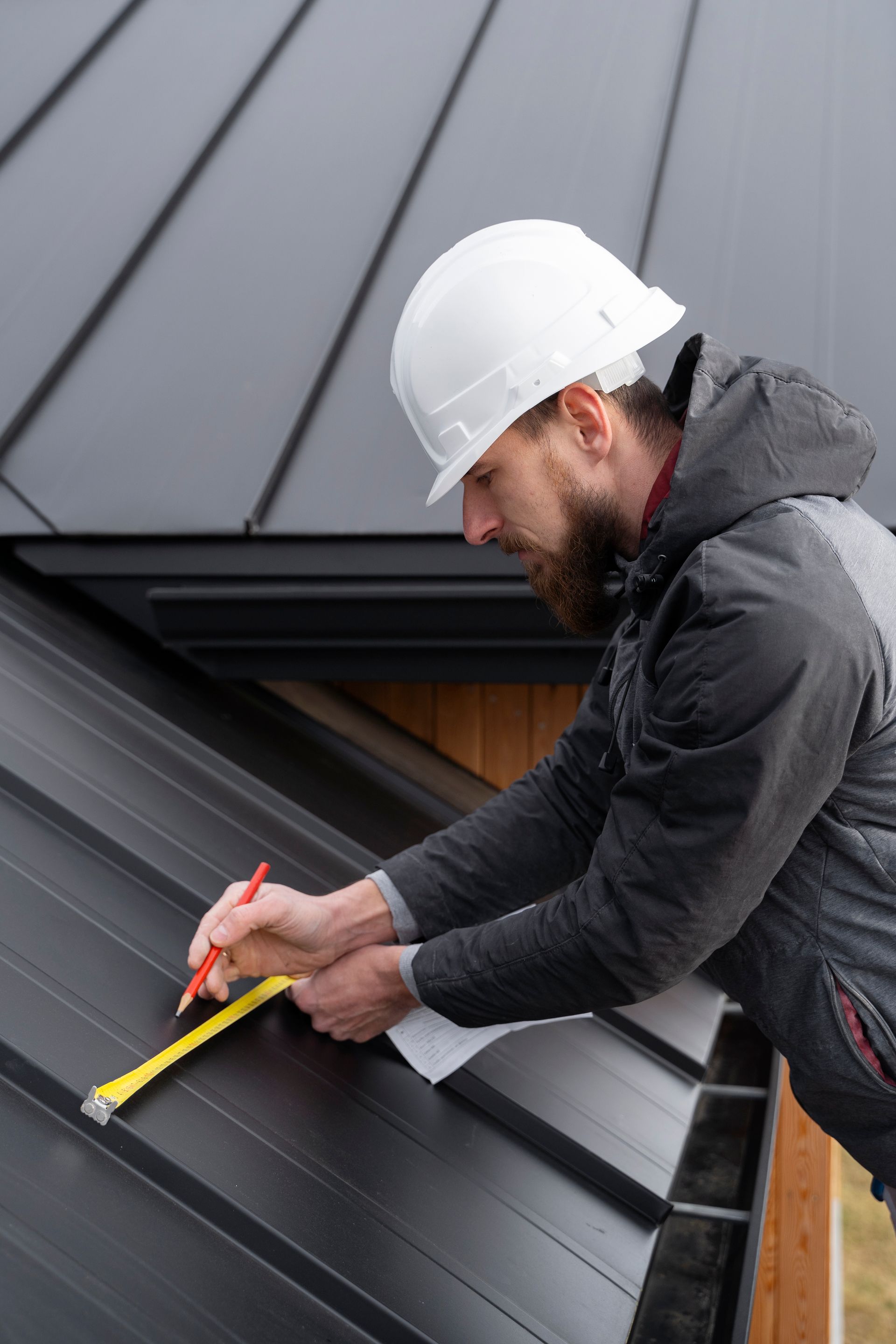
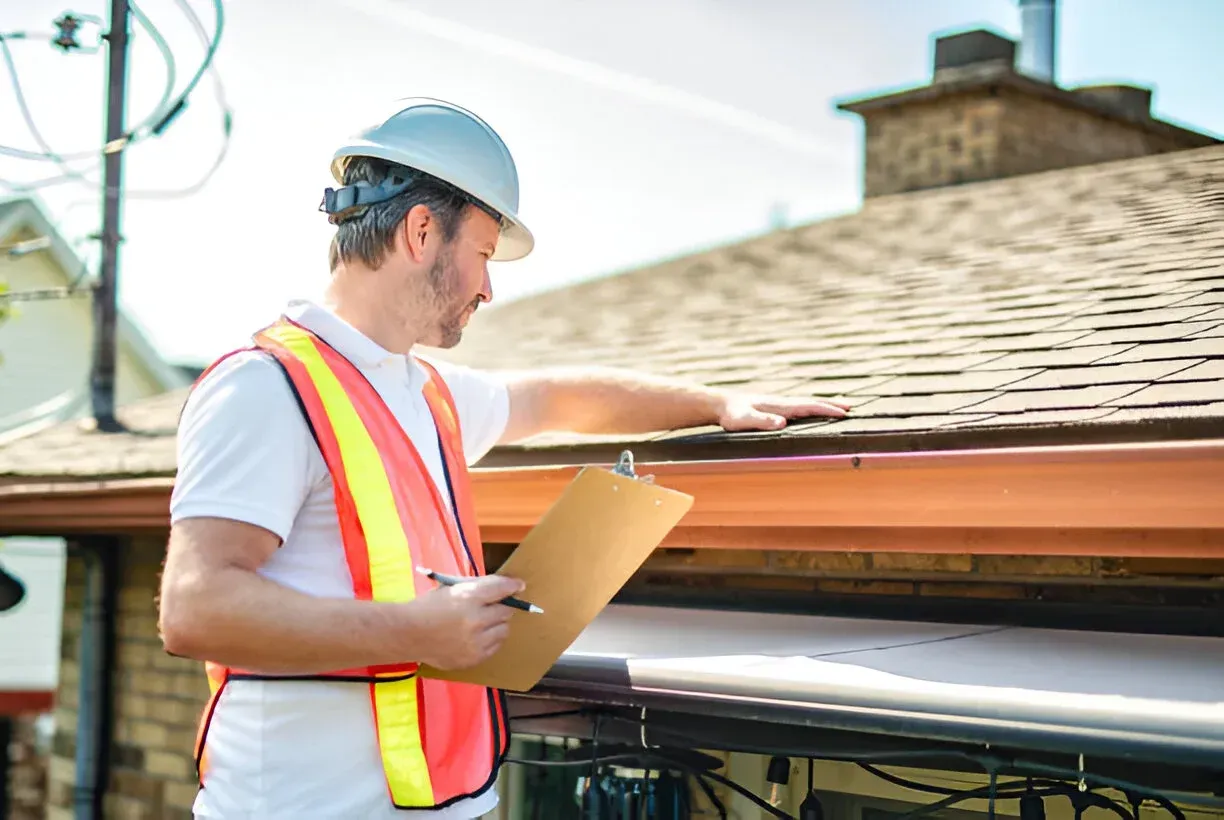
A thorough inspection is not a visual sweep from ground level. It means getting onto the roof, working across the whole surface, and documenting what is found with photographs.
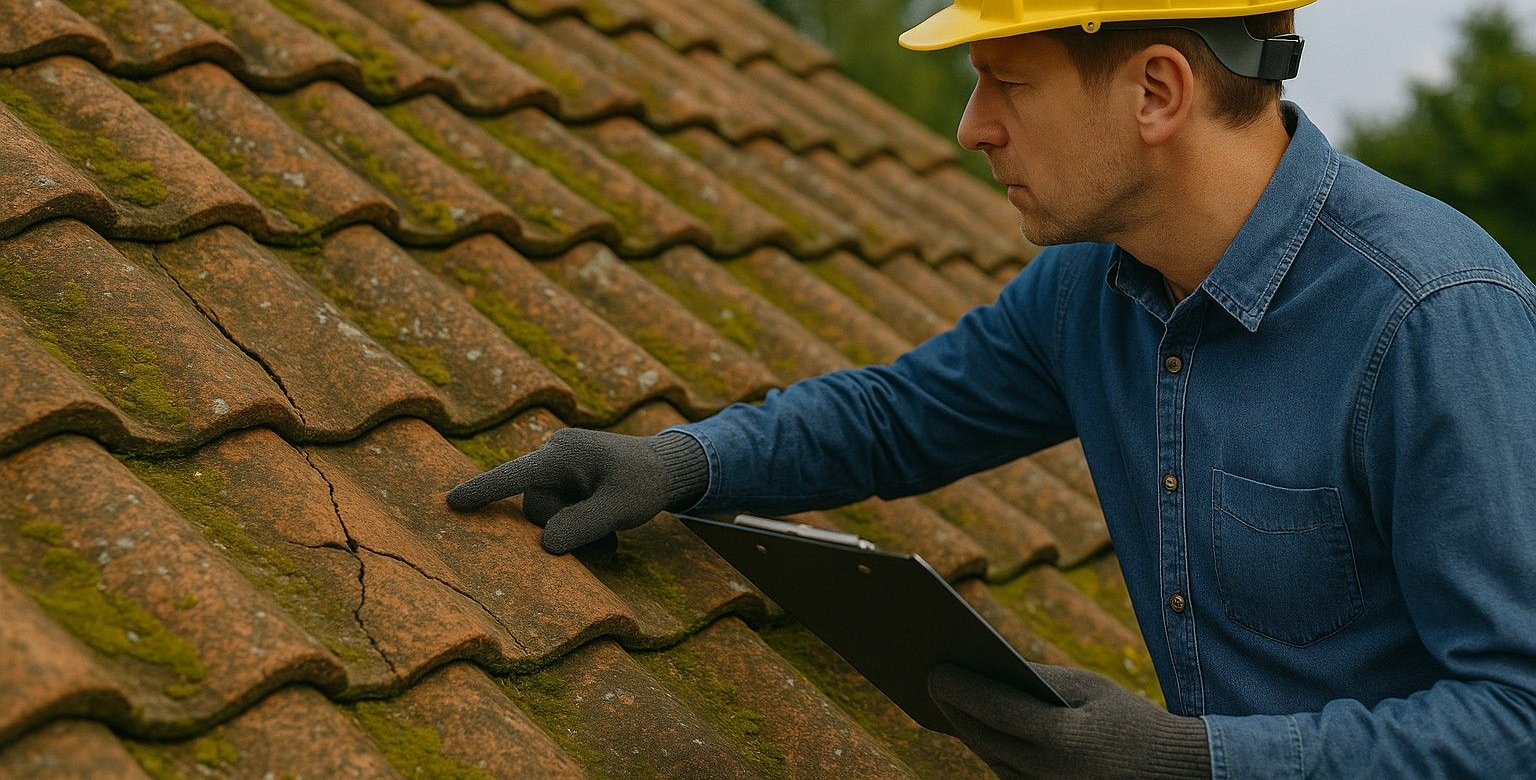
Surface condition. For flat roofs, this means checking the membrane for splits, blistering, ponding water, and UV degradation. For pitched roofs, it means checking slates or tiles for cracks, slippage, and missing fixings. The age and type of membrane matters. A 20-year-old felt roof behaves very differently from a ten-year-old single-ply system.
Flashings and upstands.
These are the junctions where the roof meets a wall, parapet, or raised edge. They are the most common failure point on commercial roofs. Lead flashings can lift, crack, or pull away from the chase. Code-compliant upstand heights matter here. On older buildings, particularly those built before current British Standards, upstands are often too low.
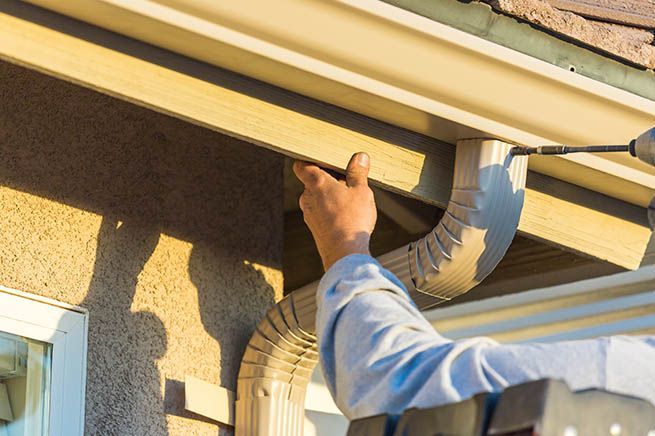
Gutters and outlets. Blocked or undersized outlets are one of the most common causes of flat roof failure. Water that cannot drain sits on the membrane, adds weight, and accelerates deterioration. Outlets need to be clear, correctly positioned, and free from debris. Gutters on lower roofs and parapet-level drainage channels all need checking.
Plant penetrations. Air handling units, extraction stacks, pipework, and any other service penetration through the roof surface are potential leak points. The collars and flashings around them need inspection, particularly on commercial and educational buildings where mechanical plant is common.
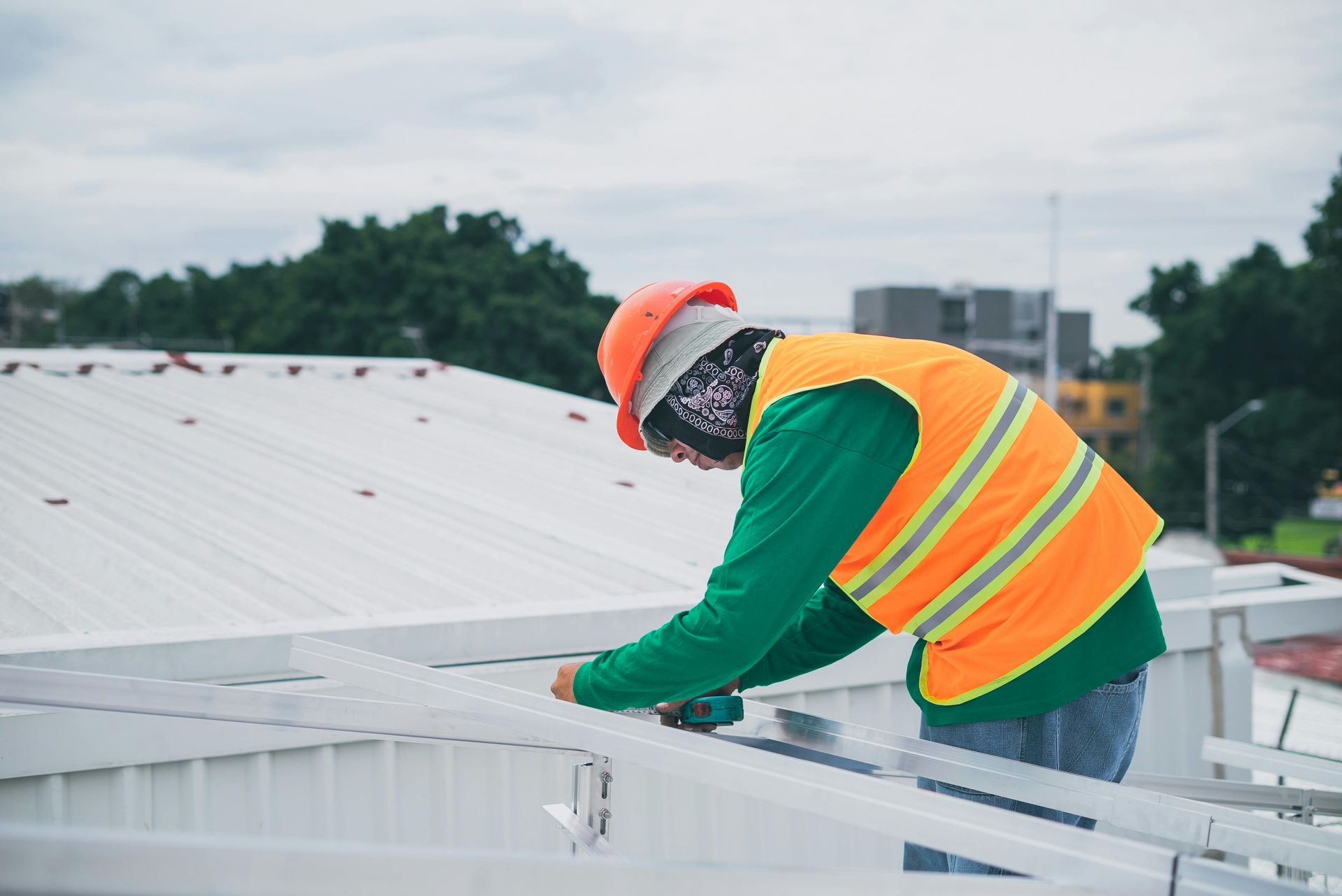
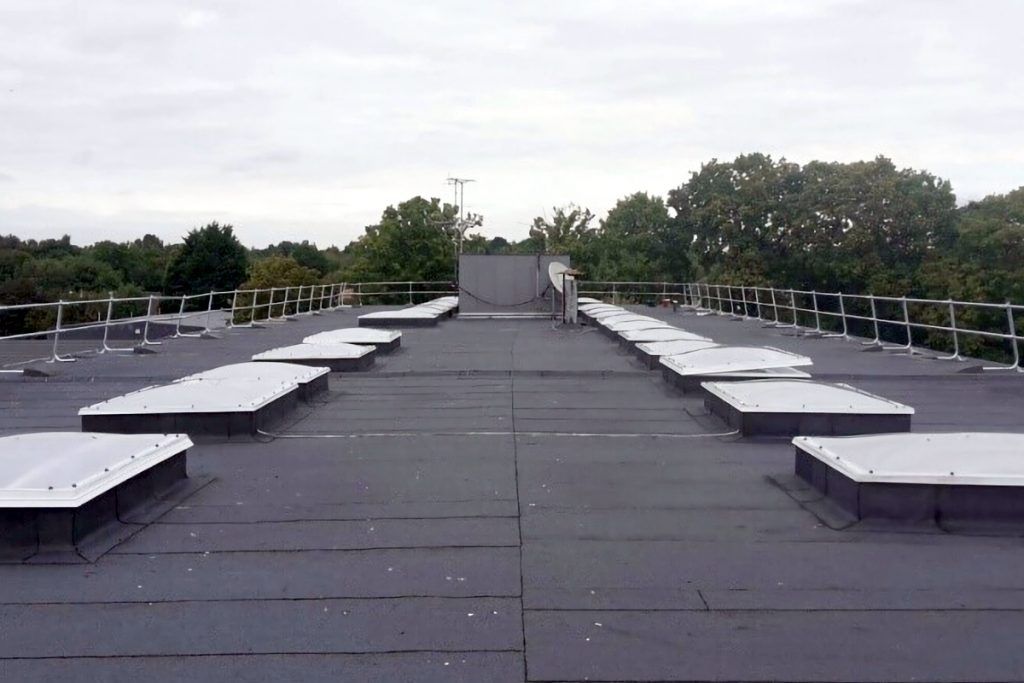
Fall protection and safety features. Any roof that is accessed for maintenance needs appropriate fall protection in place. Edge protection, anchor points, and safety lines should be checked for condition and compliance. This is not just a contractor concern. As the person responsible for the building, you need to know that the safety infrastructure is fit for purpose before any future maintenance visit.
A written photographic report after the inspection gives you a documented baseline. That is useful for insurance purposes, for internal reporting, and for planning future maintenance budgets.
Accreditations to check before appointing a contractor
Not every contractor who offers commercial roofing has the accreditations and systems a school or commercial property manager should require. Before you appoint anyone, the following are worth checking.
NFRC membership. The National Federation of Roofing Contractors is the main trade body for the industry. Members are vetted, insured, and required to work to current standards. Bondright is an NFRC-accredited contractor. That accreditation is not cosmetic. It means there is a complaints and dispute process behind the work if anything goes wrong.
CHAS or Constructionline registration. These are contractor health and safety pre-qualification schemes used widely in public sector and commercial procurement. If your organisation requires pre-qualified contractors, CHAS and Constructionline registration are the standard benchmarks. Ask any contractor you are considering whether they hold either accreditation.
RAMS documentation. Before any work on your site, a competent contractor should provide a Risk Assessment and Method Statement specific to the job. Generic documents are not acceptable. The RAMS should name your site, describe the specific work, and identify the hazards relevant to your building. If a contractor cannot produce this before starting, that is a clear signal.
Working at height training. All operatives working on your roof should hold current working at height certification. This is a legal requirement under the Work at Height Regulations 2005, not an optional extra. Ask to see evidence before work begins.
British Standard 5534. For any pitched roof work, BS 5534 is the current standard covering fixing and installation of slates and tiles. A contractor working to this standard uses mechanically fixed tiles and slates rather than relying on mortar bedding, which has a shorter service life and higher failure rate.
Lead Sheet Training Academy standards. If your building has lead flashings, valley gutters, or heritage leadwork, the operative carrying out that work should hold LSTA certification. This matters on older school buildings and listed commercial properties across Henley and the surrounding villages.
Bondright's commercial track record
Bondright has been working on commercial, educational, and public sector buildings since 1985. That is forty years of roofing across the Thames Valley, covering everything from single-storey industrial units to multi-building school campuses.
Our
school roofing work includes the Oratory Prep School, a demanding project on a heritage site where the standard of finish and the care taken around listed fabric both mattered. Schools require a contractor who understands how to work around term dates, manage site safety with pupils and staff nearby, and produce documentation that satisfies governors and trustees.
Our
NHS roofing experience covers work carried out to the standards required for healthcare premises, where continuity of operations, infection control awareness, and contractor management procedures are all part of the job.
We have also worked with Hamptons International, Oak Furnitureland, and Mint Velvet on commercial properties. These are organisations with procurement processes and contractor standards. Being an approved contractor for Hamptons International means our quality of work and documentation has been assessed, not just assumed.
For Reading office parks and Henley commercial properties, the combination of NFRC accreditation, RAMS documentation, and a verifiable project history means facilities managers can appoint us with confidence. You are not taking a chance on an unknown contractor. You are appointing a firm with a forty-year record in this area.
Our full
commercial roofing and
industrial roofing capabilities are set out on the website if you want more detail before making contact.
How to book a commercial inspection
The most straightforward next step is a free site inspection. We visit the building, carry out a full roof inspection, and provide a written photographic report at no charge. There is no obligation to proceed with any work. The report is yours to keep and use however you need it, including for internal reporting or insurance purposes.
If you have a school, office, or commercial building across the Thames Valley and August is your window to act, get in touch now. The sooner the inspection is booked, the more time you have to plan any work before September.
Contact us through our
commercial roofing page to arrange a free site inspection for your building.