Pre-winter roof check: what to look for now, in the third week of September
The first storms of autumn arrive in early November. Roofs that haven't been checked since the heatwave are six weeks away from being tested.
That's not a long window. And it goes quickly.
What changes between September and November
Right now, in the third week of September, the weather is still manageable. Daytime temperatures are dropping but not dramatically. Wind speeds are modest. Rain is occasional rather than persistent.
That changes fast.
By mid-October, overnight temperatures regularly fall below 10°C across the Thames Valley. Any water sitting in a hairline crack, behind a loose flashing, or under a lifted tile will start to freeze and expand on cold nights. The crack that was stable in August becomes a problem by the time the clocks go back.
Leaves start falling in earnest through October. Gutters that were clear in summer fill up within weeks. Blocked gutters back up, overflow, and push water against fascias and into roof edges. On hilltop properties in Sonning Common, where autumn winds arrive earlier and harder than in the valley, this process happens faster than most people expect.
Wind speeds rise significantly from late October onwards. The Met Office records consistently higher gust speeds across Oxfordshire and Berkshire in November than in September. A ridge tile that's slightly loose now, held in place by friction and habit, may not survive the first serious November gust.
The first storms typically arrive in the first or second week of November. After that, getting a roofer on your roof safely, quickly, and without a long wait becomes considerably harder. Demand spikes. Availability shrinks.
The logic of a September check is simple. You still have time to find a problem and fix it before conditions make both the problem and the fix worse.
The seven-point pre-winter ground check
You don't need to go up a ladder to do a useful first assessment. A pair of binoculars and ten minutes on a dry day will tell you a lot. Work through these seven points methodically.
Tile alignment. Stand back and look at the roof as a whole. The tile courses should run in straight, even lines. Any tile sitting higher or lower than its neighbours, or rotated out of line, is worth noting. A single slipped tile can let water in under the course above it.
Ridge tile gaps. Look along the ridge, the horizontal line at the very top of the roof. The ridge tiles should sit tight and even. Gaps between them, or sections where mortar has crumbled away, are a common cause of autumn water ingress. On older properties around Henley riverside, where Victorian and Edwardian ridge detailing is common, this is one of the first things to check.
Chimney flashings. If your property has a chimney, look at where it meets the roof. The flashing, usually lead, should lie flat and tight against both the chimney and the tiles. Any section that's lifting, buckling, or visibly separated from the masonry needs attention before winter.
Lead aprons. Lead aprons sit at the base of chimney stacks and around roof penetrations like soil pipes and skylights. Look for any lead that's cracked, split, or pulling away. Lead work that's been in place for decades can fatigue and fail quietly. A small gap in an apron can let in a significant amount of water over a wet winter.
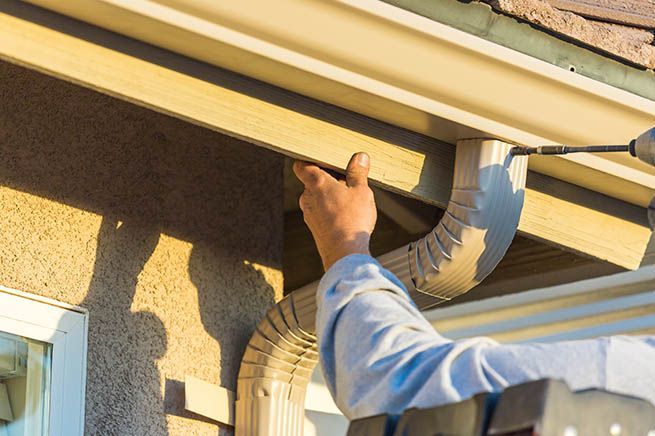
Gutters. Look along the gutterline from ground level. Are the gutters sagging or pulling away from the fascia? Are there visible blockages, plant growth, or debris sitting in them? A gutter that's already half-blocked in September will be completely blocked by November. Water that has nowhere to go will find somewhere, and it's usually somewhere you don't want it.
Fascia
condition. The fascias are the horizontal boards that run along the roofline just below the gutters. They support the gutter brackets and protect the roof edge. Look for any sections that are visibly warped, discoloured, or pulling away from the wall. Soft or rotten fascias are a common problem on exposed Reading semis where the north-facing roofline takes the worst of the winter weather.
Vegetation on or in the roof. Moss, lichen, and small plants growing in gutters or at tile junctions hold moisture against the roof surface. A light covering of moss on a north-facing slope is common and not always urgent. But heavy growth, or anything rooted in a mortar joint or gutter, should be dealt with before winter locks it in.
Work through all seven. Note anything that looks different from how it should, even if you're not sure it's a problem. That list becomes the basis for a professional inspection.
What needs going up the ladder
A ground-level check is useful. It's not complete.
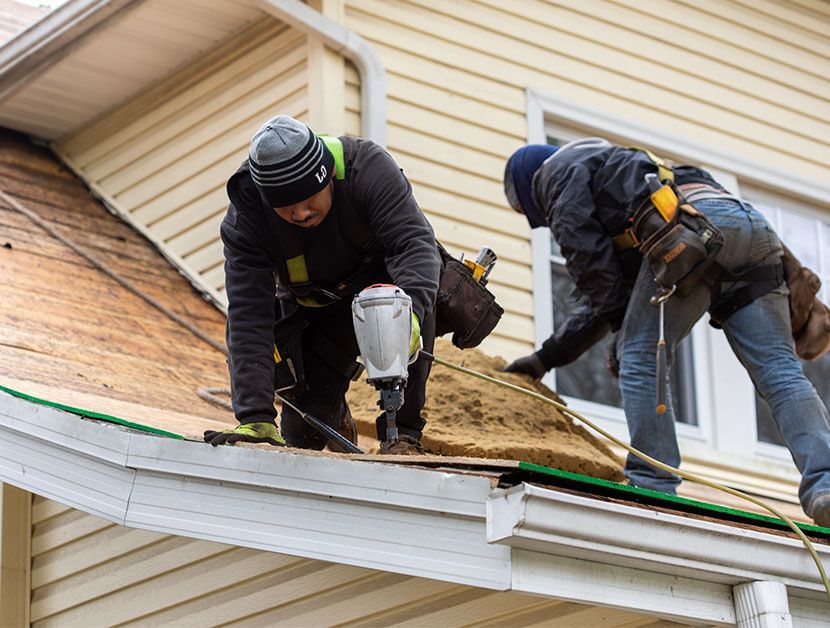
Some things simply can't be assessed from the pavement. The condition of individual tile undersides, the integrity of mortar pointing on a ridge, the exact state of a flashing at close quarters, whether a gutter bracket has corroded through, whether a valley is clear or partially blocked. These require someone physically on the roof, or at least at roof level on a ladder, to assess properly.
The honest answer on when to call a roofer rather than go up yourself is: almost always. Roof ladders, correct footwear, and the experience to move safely on a pitched surface without disturbing tiles make a genuine difference. A roofer who has been doing pre-winter callouts for 40 years has seen every failure mode and knows what to look for in two minutes that a homeowner might miss in twenty.
If your ground check turns up anything from the seven-point list above, that's a reason to book a professional inspection rather than investigate further yourself. If your ground check turns up nothing obvious but your roof is over 15 years old and hasn't been inspected recently, that's also a reason. Age and lack of inspection history are risk factors regardless of what you can see from the ground.
Our
roof inspection services cover exactly this kind of pre-winter assessment.
Why booking now beats waiting until something fails
The practical argument is straightforward.
A repair done in September or October costs what a repair costs. A repair done in November or December, after a storm has turned a loose tile into a missing tile and a damp patch into a soaked ceiling, costs more, takes longer, and happens under pressure.
Roofers are busy from November through to March. Not because they're being difficult, but because demand is genuinely higher and working conditions are harder. Cold weather, shorter days, and icy surfaces all affect what can be done safely and when. A job that takes half a day in October might take a full day in January, if the weather cooperates at all.
Booking a survey now means you get a clear picture of your roof's condition while there's still time to act on it calmly. If everything is fine, you go into winter knowing that. If there's something that needs doing, you can schedule it in October when roofers have availability, materials are accessible, and the work can be done properly.
Good [[roof maintenance]] is mostly about timing. Catching things early, before a small issue becomes a large one, is almost always cheaper and less disruptive than waiting for a failure to force your hand.
Book your free photographic survey now
We offer a free photographic roof report for properties across Henley-on-Thames, Reading, Sonning Common, and the surrounding villages. One of our roofers goes up, photographs what they find, and gives you a clear written assessment of the roof's condition. No obligation to proceed with any work.
Turnaround is typically 48 to 72 hours from your call to the report being with you.
September is the right time to do this. October is still fine. November, once the first storms have arrived and the phones are ringing, is harder to fit in quickly.
Book your
free roof check now, while the window is still open.